



Amazon
TP-Link LS1008G, Litewave 8 Port Gigabit Unmanaged Switch
$16.99
15% OFF
$19.99
Amazon's Choice
Top Seller on Amazon
Style: 8 Port, Litewave
Save
Share

Deal insights
TP-Link LS1008G Litewave 8 Port Gigabit Unmanaged Switch is a Good Deal, offering eight gigabit RJ45 ports and plug-and-play operation at a price slightly below recent levels. The port count and gigabit speeds match typical expectations for entry-level to lower mid-range unmanaged switches, and the lack of PoE or management is consistent with this price point.
Here is why
When selecting computer networking hubs, focus on port count, port speed, management, and power/PoE capabilities. Here is how this product performs:
1.
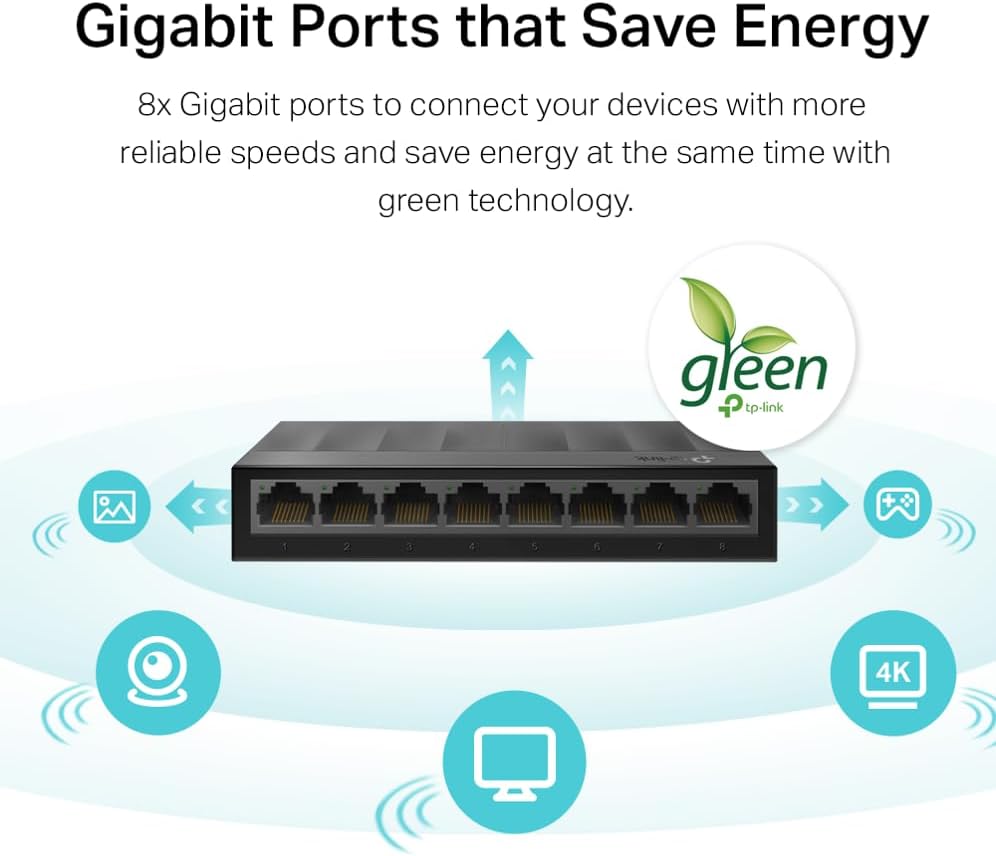
Port Count (8 ports) : Eight ports aligns with the higher end of common consumer/mid-range counts and is consistent with devices that sit between budget and basic mid-range. For users needing multiple wired connections, this is a practical count compared with typical 4–8 port home switches.
2.
Port Speed (1 Gbps) : Gigabit ports are typical for mid-range and good for modern home and small-office use. This matches mid-range expectations where gigabit is standard; absence of 10Gbps or SFP keeps it firmly in the entry-to-mid band.
3.
Management & Security (unmanaged; plug-and-play; fanless design) : Unmanaged operation is typical for consumer-priced switches and expected here; fanless design is common at this price and useful for quiet environments. If you need VLANs, QoS controls, or SNMP, this unit is weaker than managed models.
4.
PoE & Power (PoE unlisted; power source unlisted) : No PoE claim is typical for low-cost consumer switches and aligns with budget/mid-range benchmarks where PoE is uncommon. Buyers who require powered PoE ports should confirm on the product page or choose a powered/PoE-labeled model.
Deal price at $16.99: sits in the low-cost segment for consumer multiport switches and hubs. It is priced slightly below its recent 30-day average of about $17.68, which modestly improves its value given its basic unmanaged feature set.
Overall, this Good Deal fits buyers who need a simple, low-cost 8-port gigabit switch for home or small-office network expansion. Consider it when you want silent, fanless operation and basic connectivity; double-check warranty and return terms if long-term support or PoE is required.
Was this helpful?

 Editor's note
Gigabit Ethernet
Energy Efficient
Quiet Operation
Plug & Play
Reliable Data Transfer
Koupon may earn commissions on qualifying purchases.